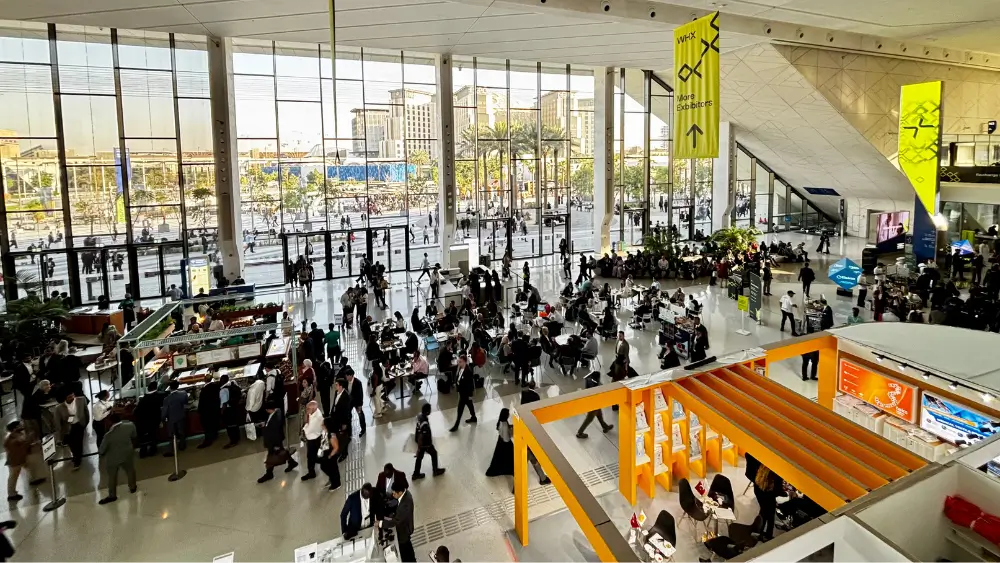
Funny thing about QR codes at event entrances: they look identical whether the system behind them is brilliant or borderline chaotic. One scan, half a second, and either everything works great, or your gate staff acts frantic at the phone, talking to operations.
What separates those two outcomes has nothing to do with the code itself but everything to do with the event access control architecture it connects to.
And multi-venue events amplify every gap in that architecture: different halls, ticket tiers, session permissions, time windows, and exhibitor zones. Getting event access control right is a systems design problem, and it deserves to be treated as one.
Everything You Need to Know in One Scan
The QR code functions work as a key rather than a ticket. When a visitor presents their badge at any access point, that scan should pull the complete registrant profile:
ticket type
purchased sessions
opted-in activities
access tier
preferences or flags set during registration.
This matters because the decision at the gate is rarely binary. A visitor might hold a general admission badge that also grants access to a sponsored workshop in Hall D, but only from 14:00. The system needs to surface all of that from a single identifier, instantly.
Actionable:Map out every permission state your event has before configuring a single rule. If you cannot write it on a whiteboard clearly, the system cannot enforce it reliably.
Architecture Rule: Flexible, Not Fragile
A well-designed event access control system already holds most of what it needs to make decisions:
the event schedule
sub-event times
purchased sessions
signed-up activities.
Session access rules can be generated from registration data, and when a visitor purchases a workshop or add-on, the permission associated with that action activates without anyone building it manually.
Where layered rule-building earns its place is in the exceptions and edge cases, combining event-level attributes (venue, zone), registration attributes (ticket class, purchased items), and system properties (date, time, location) with AND or OR logic.
Nested rules handle complex scenarios without multiplying maintenance overhead, so adjusting one condition, such as an exhibitor entry window, does not mean rebuilding the entire rule set.
INVERT logic extends flexibility further, allowing rules to grant or deny access precisely when a condition is not met. Restricting a zone to everyone except a specific ticket tier, or blocking entry once a session has begun, becomes a single clean condition rather than a workaround built from duplicate rules.
Actionable: Build test cases before the event opens. Configure your scenarios, run simulated scans, confirm the outcomes. This is the only way to catch logic errors before they become gate queues.
Real-Time Sync: The Update That Cannot Wait
Consider a visitor who arrives on day two and buys access to an afternoon masterclass at 10:45 AM. By the time they reach the session entrance at 13:55, every access control point in the venue needs to reflect that purchase.
Stale permission data is an operational liability. The system must push updates across all access locations continuously. A registration event at one end of the exhibition centre must be visible at every gate within seconds.
On-screen feedback at each access point matters just as much as the sync itself. Staff need to see whether access is permitted, and when it is denied, they need a clear reason: wrong ticket tier, time window not yet open, session at capacity. Clear reasoning at the point of decision prevents unnecessary escalations.
Actionable:During setup, test what happens when a rule changes mid-event. Confirm the update propagates to all locations before the event goes live.
Offline Resilience: Planning for the Network You Will Actually Get
Exhibition venue networks behave unpredictably when 12,000 people arrive simultaneously, and every exhibitor connects their own devices.
Access control is event-critical infrastructure, and it must keep working EVEN WHEN connectivity drops. Get the infrastructure right first: event access control hardware should run on a dedicated network segment, separate from guest Wi-Fi and exhibitor connections. Most venue network providers offer event-critical segments at cost, and for high-volume entry points, that investment is well-justified.
When a device loses its connection, a local cache of permission data keeps it operational, though it will not reflect purchases or sign-ups made after the last sync. That limitation is manageable when connectivity drops briefly. It becomes a problem when offline mode turns into the default state.
Actionable: Identify your highest-risk entry points and assign them dedicated network infrastructure. Treat offline capability as a fallback, with proper network provisioning as the design baseline.
Session Scanning: The Time Offset Problem
Session-based access control has one consistent operational reality: attendees arrive before sessions start. If a session opens at 10:00 and the access rule becomes active at 10:00, you have created a queue at 09:52.
Time-offset functionality addresses this by allowing access to open a configurable window before the published start time. This does not apply to general event access, where arrival times are self-managed, but for timed sessions with finite capacity, the offset is essential.
For organisers running a conference check in app alongside floor-level access points, the rules need to apply consistently across both, so consecutive sessions do not create conflicting access windows at the same entry point.
Context-sensitive displays at each access point add further operational value. A screen showing the current and upcoming sessions for that physical space gives staff the situational awareness to answer questions without calling a coordinator.
Actionable:Set time offsets based on session size. A 50-person workshop needs less buffer than a 500-seat keynote, so configure accordingly.
Attendance Data: More Useful Than You Think
IN scanning gives you a headcount. IN and OUT scanning gives you dwell time. The difference matters more to exhibitors and sponsors than most organisers realise, and it is essential for CPD points.
Dwell time data answers the questions that badge-scanning bingo cannot: how long visitors stayed in a sponsored space, when they left, and whether they returned. For sponsoring companies where the organiser has enabled real-time attendee data sharing, this can flow directly to their teams during the event.
Attendance reports built from this data inform future planning with precision. Organisers can see which sessions ran short, which zones were underused despite high registration numbers, and which sponsored areas generated genuine engagement.
Actionable:Decide before the event which zones warrant OUT scanning, and communicate the purpose of that data to exhibitors and sponsors. They will appreciate the transparency, and the reports will be more useful for it.
The Architecture Earns Its Keep Before Anyone Arrives
An event access control system configured well is invisible on event day. Visitors scan, access is granted, sessions fill at the right pace, staff have the information they need. The complexity lives in the setup; the execution is quiet. For organisers building or replacing this layer of their stack, our event access control solutions page covers the practical capabilities in more detail.
That setup requires thinking through every permission state in advance, testing rule logic against real scenarios, planning for network failure, and building in the flexibility to adjust rules while the event is running. None of this is especially glamorous, but it is what keeps a multi-venue event running when it matters.
Richard Northcott translates complex event technology into actionable strategies for organizers worldwide. With over a decade of experience in event software development and deployment, Richard has helped lead global conferences to optimize attendee engagement and data management.
He writes regularly on event technology strategy and has been featured for his work on digital attendee experiences.